17.2 -> 6.0
Average Google position, moving from page 2 to page 1 year over year
E-Commerce SEO Case Study
A catalog of thousands of AV products was stranded on page two: seen by millions, clicked by few. Rapid Scope Marketing lifted average Google position from 17.2 to 6.0 and grew search impressions 21% year over year.
Claim Your Free Audit
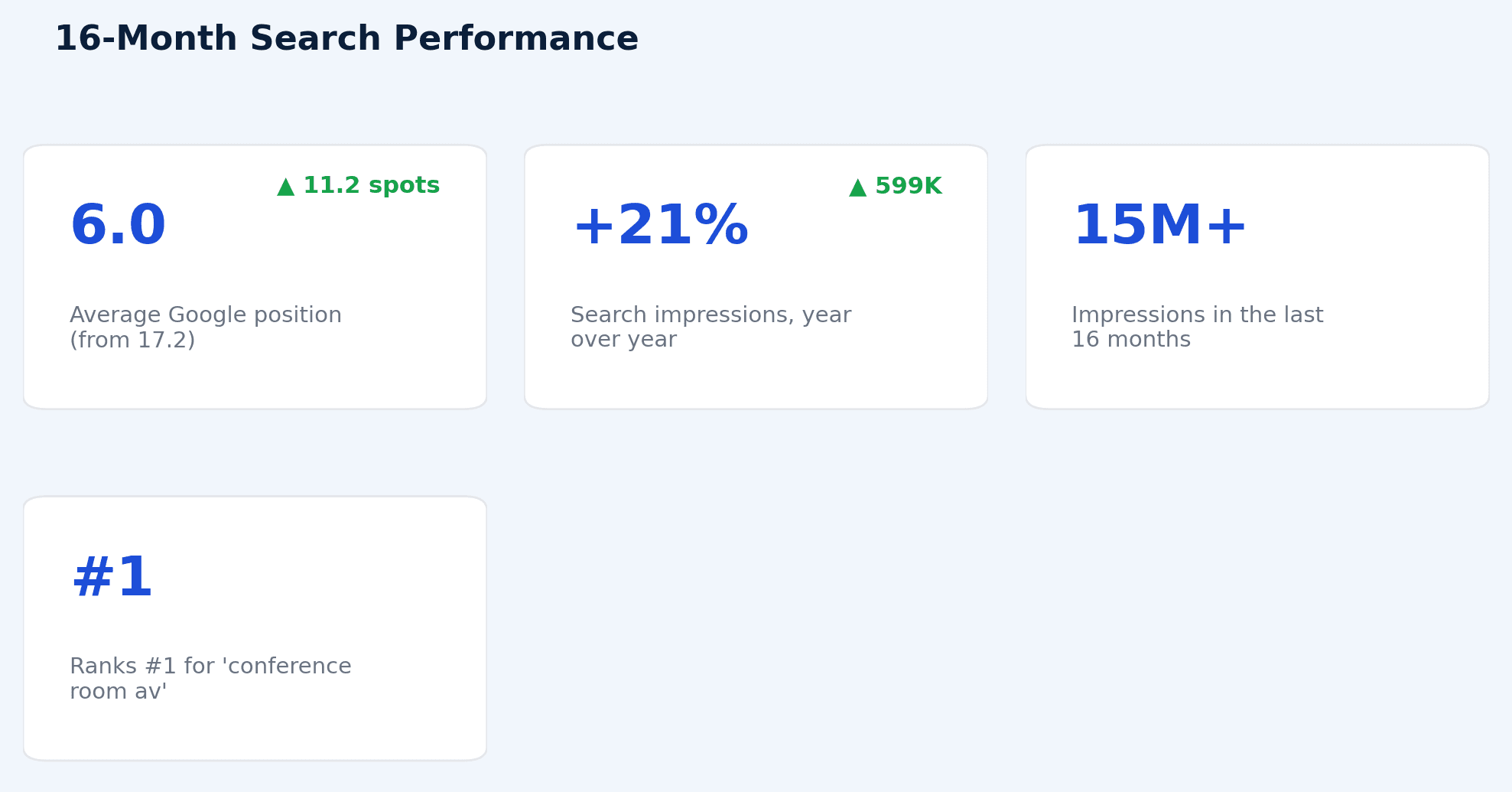
Results that speak for themselves
Average Google position, moving from page 2 to page 1 year over year
Search impressions, from 2.9M to 3.5M per quarter
Google search impressions in the last 16 months
Behind the transformation
Conference Room Audio Video E-Commerce Website is a specialist retailer with a deep catalog of commercial audio-visual equipment: DSPs, streaming encoders, cable management, mounts, and thousands of manufacturer SKUs from brands like Biamp, Mersive, Liberty AV, FSR, and Chief.
When Rapid Scope Marketing took over SEO, the catalog had enormous search visibility but limited ranking traction. The average Google position was 17.2, stranded on page two where buyers rarely look.
Through sustained technical SEO, product-page optimization, and topical authority work, Rapid Scope moved the catalog onto page one. Average position reached 6.0, impressions rose 21% year over year to 3.5 million a quarter, and a growing roster of product and brand searches now ranks in the top three.
From challenges to success
Ranking a large e-commerce catalog is different from ranking a handful of pages. The site had thousands of product URLs, each competing for narrow, high-intent searches: part numbers, model names, and category terms that a professional AV buyer types when they already know what they want.
The demand was there. Google was serving the pages nearly a million times a month. The problem was position. An average ranking of 17.2 means page two, and page two for a product catalog is a shelf in the back of the store.
For a B2B reseller, organic product visibility is the pipeline. Every part number that ranks on page one is a buyer who lands on the right product page ready to request a quote or order.
How we did it
Rapid Scope treated the catalog as a system, not a set of isolated pages. The goal was to make every product and category URL crawlable, clearly understood by Google, and backed by enough domain authority to compete for page-one positions at scale.
We worked through crawlability, indexation, site architecture, and product schema across thousands of SKU pages, removing the hidden technical friction that keeps large catalogs buried. When Google can efficiently crawl, render, and understand every product page, the whole domain becomes eligible to rank.
AV buyers search exact part numbers like dl-ar1882, sp-8100-e3, and tesiraforte dan ci. We optimized titles, specifications, and structured data so each product page became the definitive match for its SKU and brand query.
We built category-level authority around retractable cables, AV-over-IP streaming, DSP and conferencing audio, mounts, hardware, and adjacent product lines. Structured internal linking connected products to categories and buying guides so Google could see the site as a trusted AV authority.
Ranking a catalog against manufacturers and national distributors takes durable authority earned over time. Consistent, compounding SEO steadily pulled average position from the high teens into single digits and kept it there.
Before & after
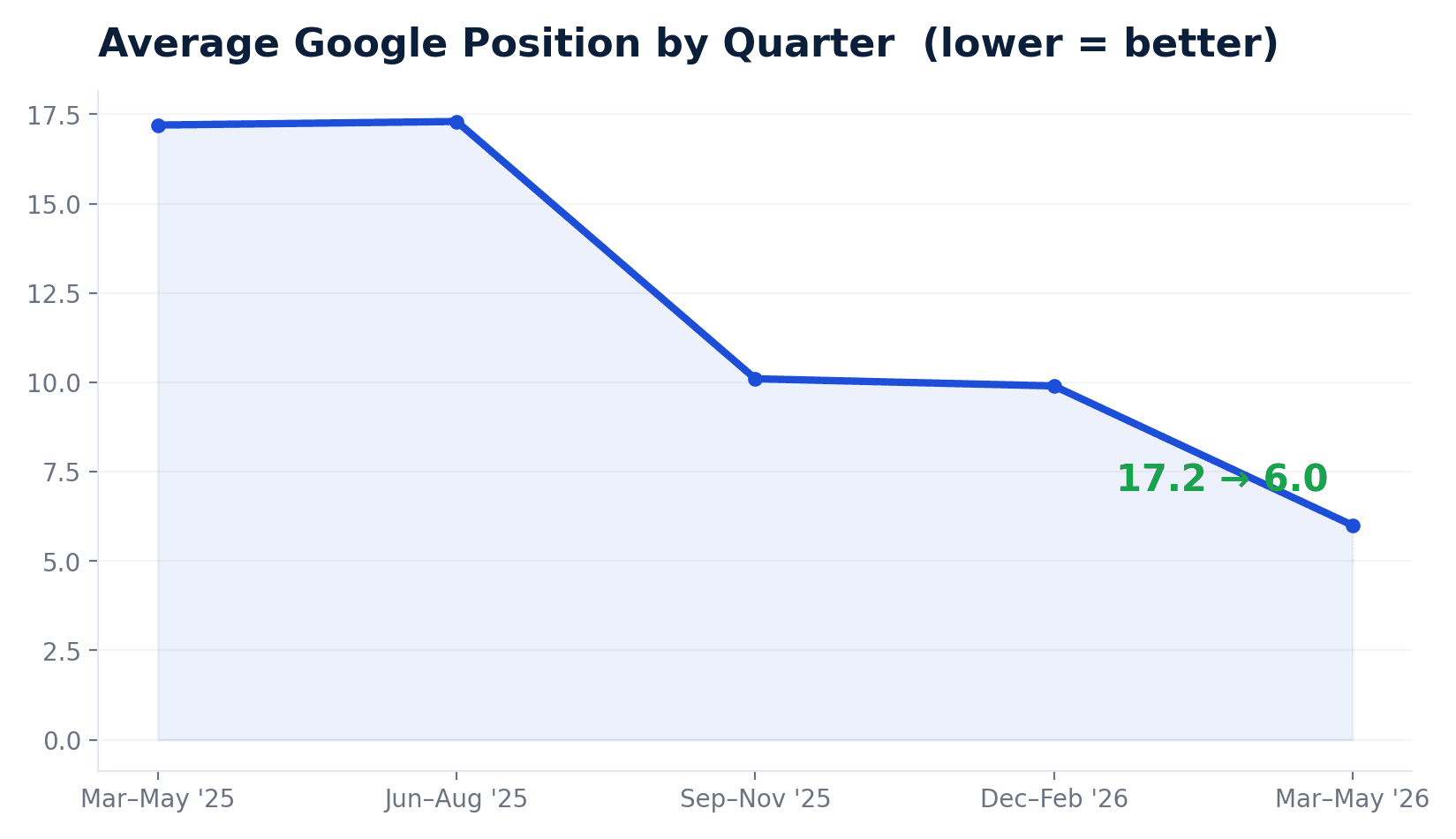
The clearest measure of the work is ranking position. Across the window of data Google retains, the catalog's average position fell steadily from 17.2, deep on page two, to 6.0, firmly on page one.
As rankings improved, search visibility grew with them: impressions rose 21% year over year to 3.5 million a quarter, and more than 15 million times in the last 16 months a product or category page appeared in Google results.
Note on clicks: across this same window, click-through rates compressed as Google added AI Overviews and richer result features that answer more queries on the results page. In that tougher click environment, rankings and impressions still grew. All figures are drawn directly from Google Search Console; because Google retains roughly 16 months of data, earlier gains from the start of the engagement fall outside the window shown.