210
Keywords ranking on page 1 of Google (of 492 total)
SEO Case Study
A specialty e-commerce brand launched into a niche crowded with big-box retailers and marketplaces. Over a two-year engagement, Rapid Scope Marketing made it the #1 organic result for the category's highest-value buying searches.
Claim Your Free Audit
Results that speak for themselves
Keywords ranking on page 1 of Google (of 492 total)
Estimated value of its organic search traffic
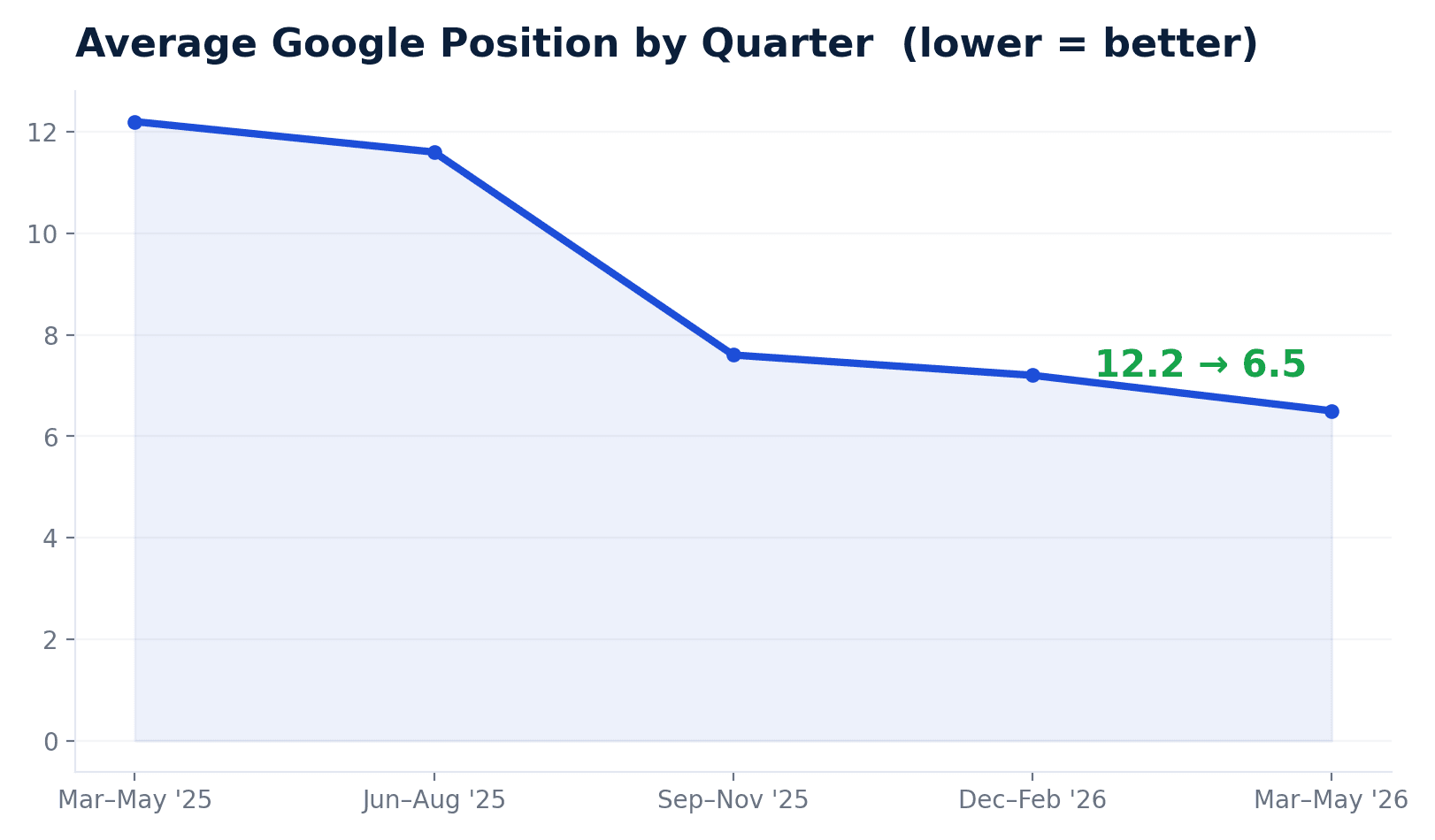
Average Google position — page 2 to page 1
Behind the transformation
This popup outlets brand is a US e-commerce brand selling pop-up power outlets for kitchen countertops, islands, and workspaces. When Rapid Scope Marketing began the engagement, it was a brand-new store competing for attention against national big-box retailers, marketplaces, and electrical manufacturers, all with far more authority.
Two years of sustained SEO later, the brand ranks #1 on Google for the exact searches its buyers make: "pop up outlets," "countertop pop up outlet," "pop up outlet for countertop," and "pop up outlets for countertops." Its average position across the catalog climbed from 12.2, deep on page two, to 6.5 on page one, it now holds 210 page-one keywords, and its organic visibility is worth an estimated $20,700 a month in equivalent ad spend.
In a niche owned by giants, a specialist brand became the answer.
From challenges to success
A new e-commerce brand in a hardware category starts at a structural disadvantage. When someone searches "pop up outlets for countertops," Google's first page is contested by Home Depot, Lowe's, Amazon, Wayfair, and established electrical manufacturers, sites with millions of pages and years of accumulated trust. A brand-new specialty store has none of that history.
Worse, these are high-intent commercial searches. Someone typing "countertop pop up outlet" is close to buying. Every one of those results that a competitor owns is a sale the new brand never sees. Ranking on page two, where the store started, at an average position of 12.2, means being invisible at the exact moment a customer is ready to purchase.
For a single-category e-commerce brand, organic search isn't a nice-to-have; it's the storefront. Paid ads can buy visibility, but margins in a niche product category rarely sustain it forever. The brand needed to own its category in organic search, not rent it.
That kind of position isn't won in a quarter. It takes sustained, technically disciplined SEO and authority built over years.
How we did it
Rapid Scope set out to make the Popup Outlets Brand the most relevant, most trusted result for every way a buyer might search for a pop-up outlet, and to build the authority needed to hold those positions against far larger competitors.
We built clean, crawlable product and category pages with the structured data, specifications, and on-page signals Google needs to trust a store. For an e-commerce site, technical health and clear product pages are the foundation everything else ranks on.
We mapped the category’s commercial searches — "countertop pop up outlet," "pop up outlet for countertop," "kitchen pop up outlet," "pop up outlets for kitchen island" — and optimized the pages that answer them precisely. These are the searches with real purchase intent, and they are exactly where the brand now ranks #1 and #2.
We expanded coverage beyond the money pages into the full topic — outlet types, installation, tamper-resistant and GFCI variants, kitchen and countertop use cases — with internal linking that ties it together. This breadth (492 ranked keywords today) is what signals to Google that the brand is a category authority, not a single-product listing.
Outranking big-box retailers requires real off-site authority. Over the engagement, the domain earned a backlink profile of 34,290 links from 229 referring domains — the trust signals that let a specialist brand hold page-one positions against national competitors.
Before & after
The clearest measure of the work is where the brand ranks. Across the window of data Google retains, average position improved steadily from 12.2, page two, to 6.5 on page one, with the whole catalog rising together quarter after quarter.
Today the brand holds 210 keywords on page one of Google, 90 of them in the top three, 18 at position #1, and its organic search visibility is worth an estimated $20,700 a month in equivalent paid traffic. Most importantly, it ranks #1 for the category's highest-value buying terms, the searches that turn into orders.
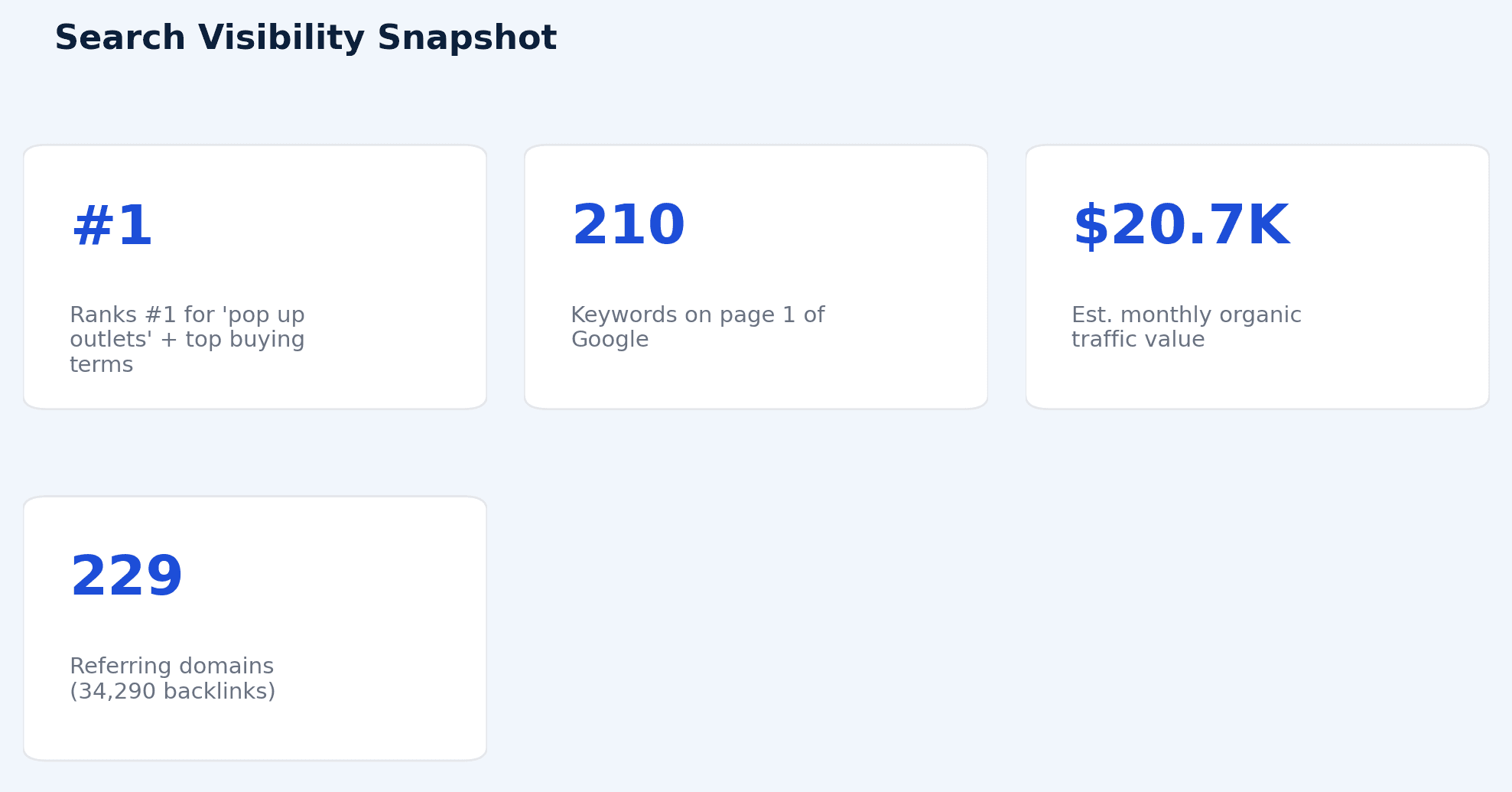
Notes: ranking position and traffic figures come from Google Search Console (property data, average position) and DataForSEO (keyword counts, estimated traffic value, and backlinks, third-party US estimates). Over the retained GSC window, click-through rates across the sector compressed as Google added AI Overviews and richer results, and Search Console retains only ~16 months of data, so earlier gains from the start of the engagement fall outside the window shown. The lasting result is category-leading organic positions on the searches that drive sales.
Now winning in AI search
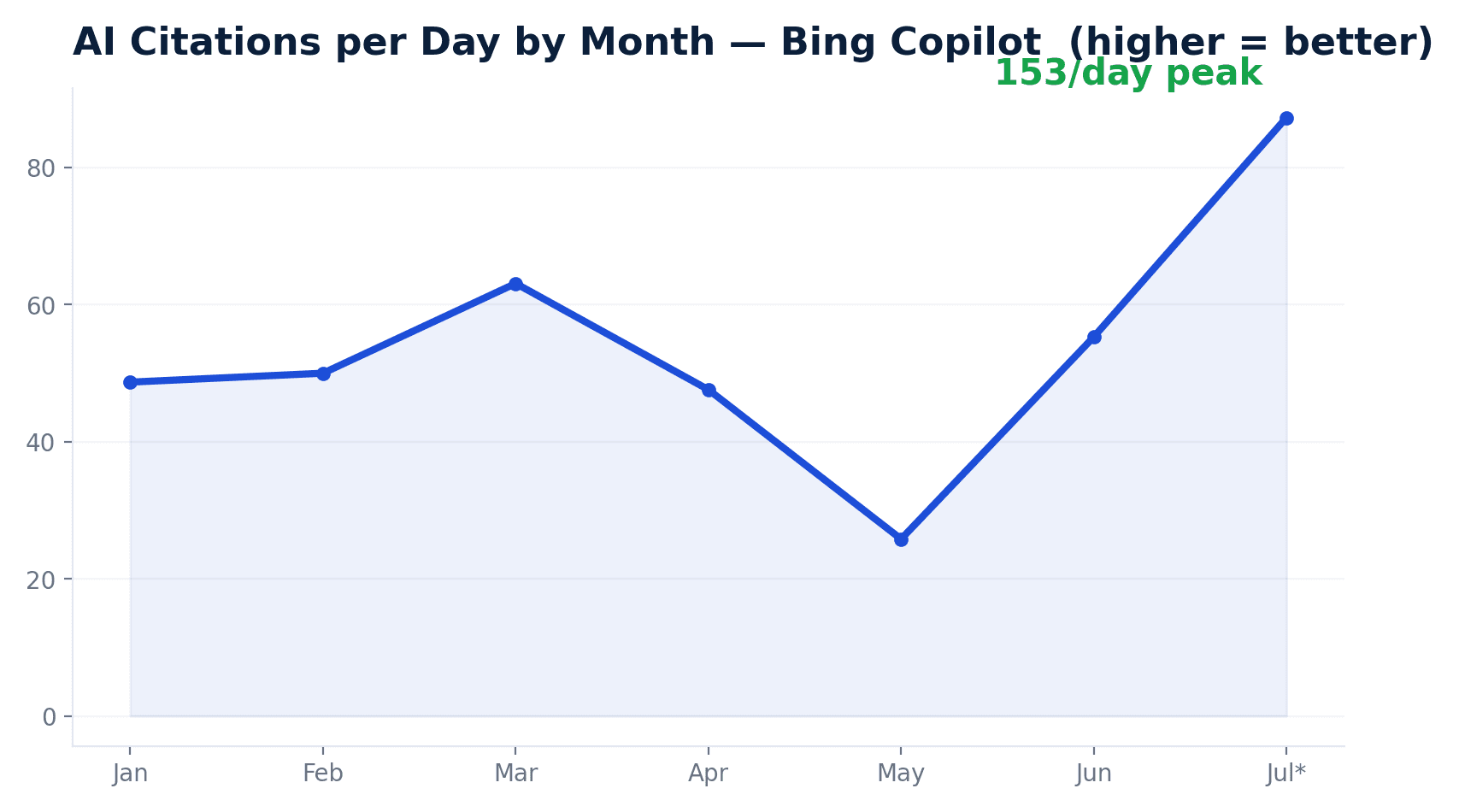
Search is shifting from links to answers, and the same authority that wins Google's page one is now making the brand a source that AI answer engines cite directly. In Bing's AI performance data, the number of times Bing Copilot cited the Popup Outlets Brand in an AI answer climbed to record highs in early July 2026: a peak of 153 citations in a single day, with the week of July 6 averaging roughly 120 a day, up from about 49 a day at the start of the year. On a strong day, AI answers now pull from as many as 15 different pages on the site.
The pattern holds in ChatGPT. Asked for "the best pop-up outlets for kitchen countertops and islands," ChatGPT (with live web search) named the Popup Outlets Brand as the recommended place to buy, citing it more than any other retailer, across multiple product brands including Lew Electric, Hubbell, and Wiremold. In an AI-first search world, the brand isn't just ranking; it's the source the answer is built from.
AI-visibility figures from Bing Webmaster Tools (AI Performance Overview, citations) and a live ChatGPT (GPT-4o, web search) query on July 13, 2026. Daily citations are volatile; May 2026 was a low month before the June–July climb to record levels.